
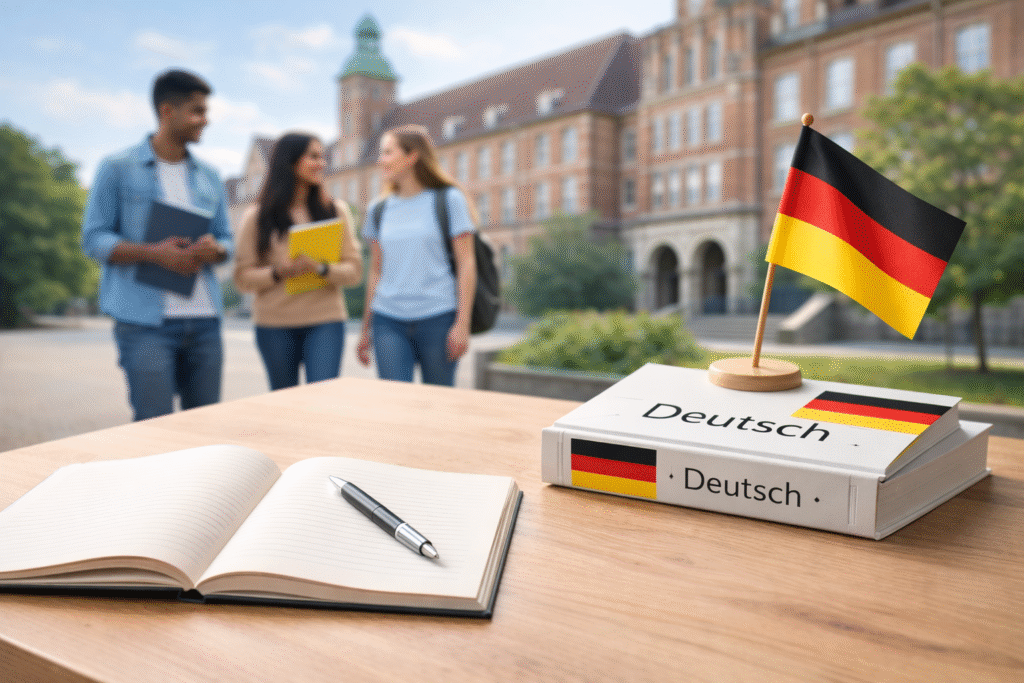
Is German Required for Public Universities in Germany?
A Clear, Honest Guide for Indian Students
Germany is one of the most attractive study destinations for Indian students.
Public universities offer low or no tuition fees, globally recognised degrees, and strong career opportunities.
But one question confuses almost every applicant:
Is German required for public universities in Germany?
Some people say yes, absolutely.
Others say no, English is enough.
The real answer is not black and white.
This article explains the truth — clearly, honestly, and without false promises.
Short Answer (For Quick Readers)
Yes, German is required for most public universities in Germany — but not for all programs.
Now let’s understand when, why, and how much German is needed.
Why This Confusion Exists
Indian students often hear:
- “Germany offers English-taught programs”
- “You don’t need German at all”
- “Public universities are free”
All of this is partly true, but incomplete.
The confusion exists because:
- Universities offer different languages for different programs
- Bachelor’s and Master’s programs follow different rules
- Daily life in Germany is mostly German, not English
Language of Instruction: The Key Factor
German requirement depends mainly on the language in which your course is taught.
Let’s break it down.
Bachelor’s Degree at Public Universities
German is usually REQUIRED
Most Bachelor’s programs at public universities are taught in German.
That means:
- Lectures
- Exams
- Assignments
- Class discussions
All happen in German.
Typical German level required:
- B1 or B2
- Certified by Goethe, telc, TestDaF, or DSH
👉 If you want to do a Bachelor’s degree in Germany, German is almost mandatory.
Master’s Degree at Public Universities
Depends on the program
Many Master’s programs are offered in:
- English
- German
- Or a mix of both
If the program is in English:
- German is not mandatory for admission
- English proficiency (IELTS/TOEFL) is required
If the program is in German:
- German language proof is required (B1/B2/C1)
However, here is the important reality.
Even for English-Taught Programs, German Still Matters
Even if your Master’s program is fully in English:
- University administration works in German
- Housing contracts are in German
- Part-time jobs require German
- Internships prefer German speakers
- Daily life happens in German
So while German may not be required on paper, it is required in real life.
Public vs Private Universities (Important Difference)
Public Universities
- Mostly German-taught
- Low or no tuition fees
- High academic standards
- German often required
Private Universities
- Mostly English-taught
- High tuition fees
- German often optional
- Lower demand for German
👉 Students choosing public universities benefit greatly from learning German.
Exams Accepted for German Language Proof
If German is required, universities usually accept:
- Goethe-Zertifikat (B1/B2/C1)
- TestDaF
- DSH
- telc
Each university mentions accepted exams clearly on its website.
How Much German Is Enough?
This depends on your goal.
For Admission Only
- B1 or B2 (depending on program)
For Comfortable Study & Life
- B2 is ideal
For Jobs & Internships
- B2 to C1 gives a strong advantage
Learning German early reduces stress later.
Common Myths Indian Students Believe
❌ “English is enough everywhere”
No. English is enough only inside some classrooms.
❌ “I’ll learn German after reaching Germany”
Possible, but extremely stressful and risky.
❌ “German is too difficult”
German is structured and learnable — if taught correctly.
Why Learning German Before Germany Is Smarter
Students who learn German early:
- Adapt faster
- Feel confident
- Get part-time jobs easily
- Make local friends
- Perform better academically
Those who don’t:
- Struggle silently
- Depend on others
- Miss opportunities
Language is not just a requirement — it is freedom.
Is Learning German Worth It for Germany?
If you are planning:
- Public university education
- Long-term stay
- Jobs or permanent settlement
Then yes, absolutely.
German is not an extra skill.
It is part of the German system.
How Early Should You Start Learning German?
Ideally:
- Start 12–18 months before intake
- Reach at least A2/B1 before applying
- Continue learning alongside applications
This makes the entire journey smoother.
KlarTalk’s Honest Advice
We do not say:
“German is compulsory for everyone.”
We say:
“German decides how easy or difficult your Germany journey will be.”
At KlarTalk, we help learners:
- understand whether German is required for their goal
- build confidence step by step
- prepare realistically, not emotionally
Final Answer: Is German Required for Public Universities in Germany?
Yes, in most cases — especially for Bachelor’s programs.
For some Master’s programs, it may not be mandatory for admission, but it is essential for life and career growth.
German is not a barrier.
It is a bridge.
Thinking About Studying in Germany?
Before asking:
“Do I need German?”
Ask:
“How confident do I want to feel in Germany?”
That question matters more.